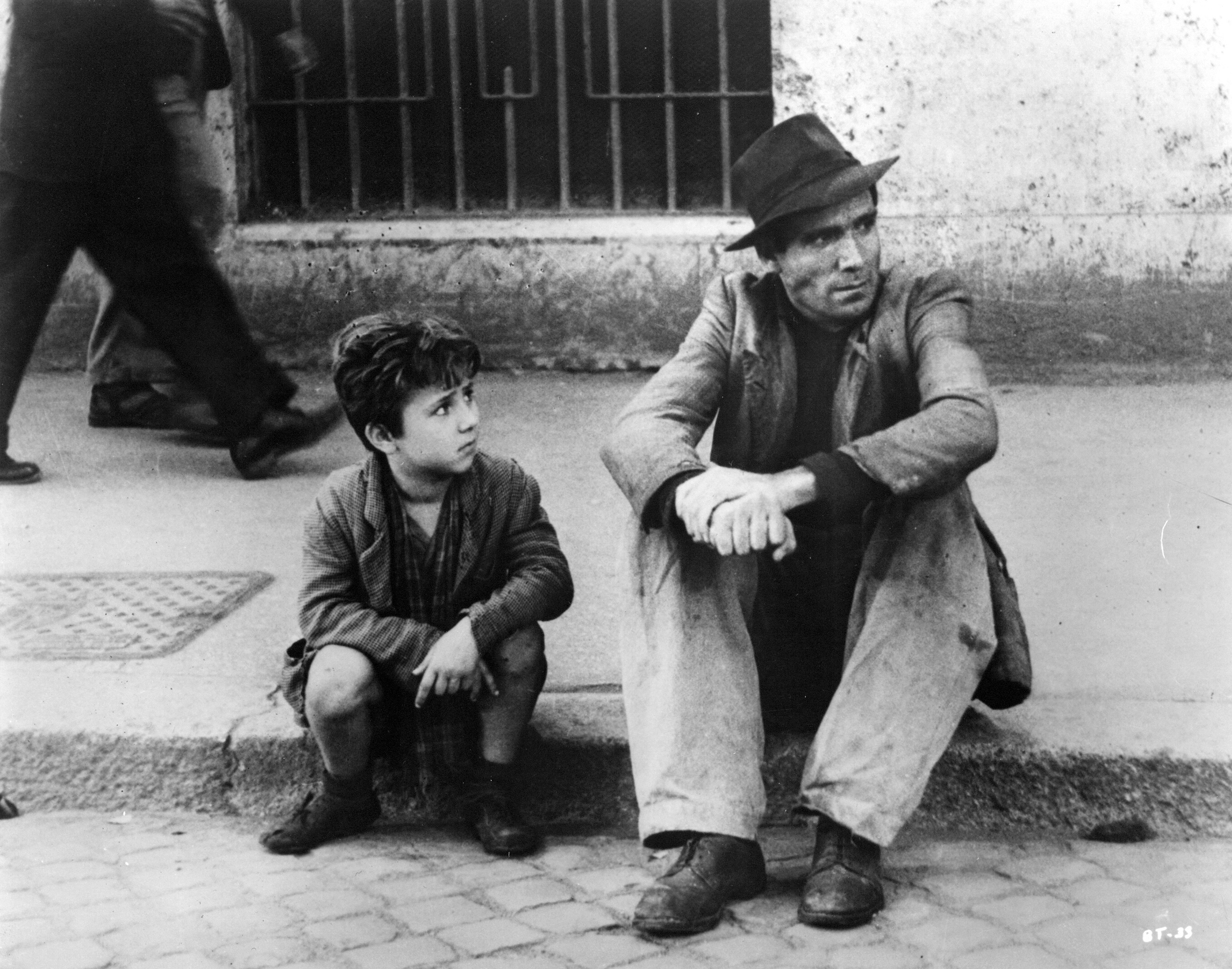
The Thematic and Ironic Connections in “The Bicycle Thief”
In Vittorio De Sica’s “The Bicycle Thief,” the film intricately weaves the destinies of two bicycle thieves, illustrating the cyclical nature of poverty and desperation. The first thief steals a bicycle because he cannot afford one, aiming to sell it for survival. Antonio, the protagonist, mirrors this act of theft when he steals a bicycle out of sheer necessity to maintain his livelihood after losing his own. This mirroring establishes a poignant irony: both men are driven to the same desperate act by economic hardship, blurring the lines between victim and perpetrator.
De Sica’s Cinematic Mastery in Illustrating Desperation
De Sica’s masterful use of the camera underscores the pervasive nature of bicycle theft and the fragile socio-economic conditions of post-war Rome. Through numerous shots of unattended, unlocked bicycles at the stadium, he creates a sense of vulnerability and temptation. The frequent depictions of bustling bike shops highlight how easy it is to dismantle and sell stolen bicycles, feeding into a black market economy. This visual landscape suggests that the ranks of bicycle thieves could swell easily, as economic conditions drive ordinary men like Antonio to crime.
Social Ironies and the Fragility of Livelihood
The bicycle in the film is more than a means of transportation; it symbolizes hope, opportunity, and the fragile grip on a better life. Antonio’s new job, contingent upon having a bicycle, offers a path to improved social status and stability for his family. Ironically, the very object that promises upward mobility becomes the source of his downfall. When the bicycle is stolen, Antonio’s ability to provide for his family vanishes, plunging him back into desperation. His subsequent decision to steal a bicycle reflects the social irony: in a society that offers limited opportunities, the same tool that could elevate one’s status can also lead to one’s moral and social decline.
Allegorical Significance of Antonio’s Quest
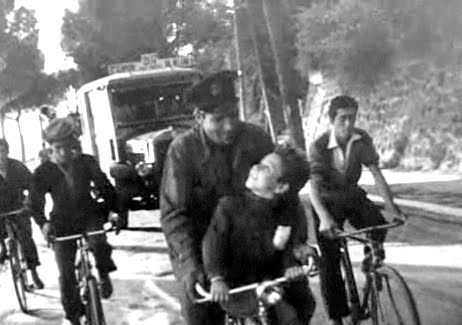
Antonio’s relentless pursuit of his stolen bicycle is an allegory for the broader human struggle for dignity and survival in the face of systemic oppression. His journey through the streets of Rome, marked by moments of hope, despair, and humiliation, encapsulates the relentless pursuit of a better life. His actions, driven by desperation, culminate in a tragic irony when he jeopardizes his son Bruno’s safety and his own moral compass. Antonio’s ultimate failure to recover the bicycle signifies the elusive nature of hope and stability for the impoverished, leaving him humiliated and despondent, yet somehow more human and relatable in his vulnerability.
Bruno as the Emotional Barometer
Bruno, Antonio’s young son, serves as a poignant barometer of Antonio’s emotional state throughout the film. In moments of crisis, such as when Antonio fears Bruno has drowned or when Bruno narrowly escapes being hit by cars, Bruno’s reactions reflect the deepening despair and distraction consuming his father. These instances reveal Antonio’s increasing desperation, as he becomes so consumed by the search for the bicycle that he neglects Bruno’s safety.
In a particularly heart-wrenching scene, Antonio slaps Bruno in a moment of misplaced frustration, only to later try to mend their relationship by offering pizza. Bruno’s resilience and capacity for forgiveness are touching, highlighting the enduring bond between father and son despite the hardships they face.

Final Sequence and Emotional Resolution
In the film’s final sequence, after Antonio’s failed theft and public humiliation, he holds Bruno’s hand as they walk away, symbolizing a return to familial solidarity. This act of holding hands, a simple yet profound gesture, encapsulates the emotional resolution of the film. Despite the day’s traumatic events, Antonio’s renewed focus on Bruno suggests a glimmer of hope and a reaffirmation of their bond. The poignant image of them walking together through the crowded streets captures the essence of their relationship—fraught with hardship yet bound by love and mutual support.
Conclusion
“The Bicycle Thief” is a masterful exploration of the human condition, societal inequities, and the enduring bond between father and son. Through De Sica’s poignant storytelling and evocative cinematography, the film transcends its narrative to deliver a powerful commentary on the struggles of the impoverished. The ironic parallels between the two bicycle thieves, the social implications of Antonio’s loss, and the allegorical journey for dignity are expertly interwoven to create a timeless cinematic masterpiece.
Discover more from Decentralized Intelligence
Subscribe to get the latest posts sent to your email.
 Decentralized Intelligence